Polo Grounds

Polo Grounds

Tuesday, March 24, 2015

Predictions for 2015 MLB season

I didn't do so hot last year, but I'm here once again to try my 15 predictions for the 2015 season. Go easy on me. Many of these predictions, if they came true, would do wonders for my fantasy baseball team (who finished 6th out of 8 last year) so here's to hoping they work out, for my blog and my fantasy team (named BoSemien Rhapsody, by the way).

Here we go.

1. Oswaldo Arcia is the AL Home Run leader

Dude hit 20 last year in about a half season, and if he can cut down the K numbers and get some pitches to hit he should be able to come close to 40 this season. He will compete with Chris Carter and George Springer for the title.

2. Nelson Cruz hits less than 30 home runs

However, hitting 25-28 bombs while also hitting around .260 will be a huge, huge upgrade for Seattle at the DH position anyway.


3. Kris Bryant hits over 25 home runs after getting called up

I saw him play a lot against Gonzaga when he was in college, and that power is the real deal.

4. Jose Iglesias wins the AL SS Gold Glove award

If he stays healthy it won't even be a competition. Learning from Omar Vizquel is about as good as it gets.


5. James Paxton wins 15 games, records over 180 strikeouts

Highest average fastball velocity for Left-Handed starters last year, Paxton (if he stays healthy) will be able to rack up K's and wins with the revamped Mariners offense.

6. Albert Pujols passes Mike Schmidt (548) on the all-time home run list this season

He needs 28 to do so, which is exactly how many he hit last year. More time at DH and a good line-up around him should give him some pitches to hit hard this year.

7. The San Diego Padres finish below .500.

Their infield is a disaster and Matt Kemp and Wil Myers are pretty big question marks. Quentin/Gyorko/Barmes/Solarte/Middlebrooks is nothing to write home about, and an aging bullpen won't do them any favors either.

8. Mike Trout joins the 40-40 club.

This one is pretty ballsy, but if Trout can cut down on the strikeouts and get more pitches to hit, he can easily have 40 HR power. The steals should come as well.

9. Drew Smyly finishes in the top 10 for the AL Cy Young award.

He was absolutely lights out with Tampa last year. An early season injury doesn't look to keep him out long, and his stuff is nasty. A better defense behind him can't hurt either.


10. Brian Dozier hits more HR than every other second baseman in the league.

Robinson Cano's power is down, Dustin Pedroia looked to be aging last year, and many other 2B don't have the power Dozier does.

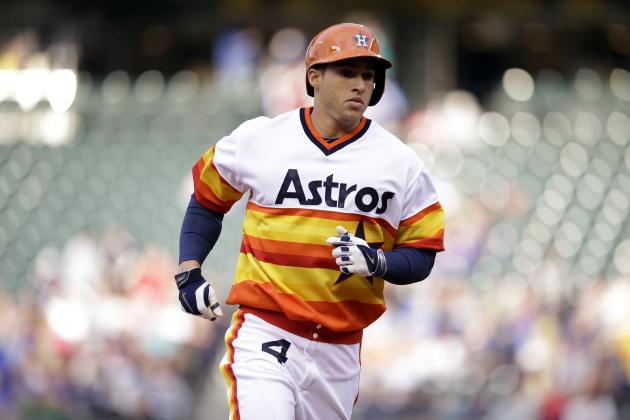
11. George Springer hits 35+ home runs.

His power looks legit, and a full season in the Majors with a lot more firepower around him should get him there.


12. AL play-off teams: Mariners, Royals, Red Sox, Angels, Tigers.

The Mariners are much improved, the Royals proved the bullpen is vital, and the firepower of the Red Sox, Angels and Tigers line-ups prove too much for the rest of the AL.

13. NL play-off teams: Dodgers, Pirates, Nationals, Cardinals, Brewers

The NL Central is a power division, and the Cubs are just on the outside looking in while their prospects continue to develop together.

14. Red Sox and Cardinals play for the World Series.

I hate, hate, hate myself for this prediction. God I hate myself for this prediction.

15. Red Sox in 7.

Better than if it were the Cardinals.

Wish me luck! (Except for on the last two, I would be happy to get those wrong).

Wednesday, March 18, 2015

13 guys not named Derek Jeter who retired in 2014

Derek Jeter highlights a large list of players who played the last game of their career in 2014. Although he will be the most remembered, he is not the only player to hang up his spikes in 2014 who will merit consideration for the Hall of Fame (although he is the only lock).

Here is a list of 13 players who retired this year, and a brief discussion on their career accomplishments, and chances for the Hall of Fame. (Note: These players recorded their last game in 2014, meaning they will be eligible for the Hall in 2020. Players such as Dontrelle Willis and Juan Pierre, who haven't played in the MLB since 2012 and 2013, were not counted because they will be on the ballot before 2020)


Bobby Abreu

Abreu is quite possibly the most criminally underrated hitter of all time. He finished his career with 2470 hits, 574 doubles (21st all-time), 1476 walks (20th all-time), 288 home runs, 1363 RBI's, and exactly 400 stolen bases. Even more impressively, he finished his 18 year career with a slash line of .291/.395/.475/.870 and an OPS+ of 128. His career WAR of 59.9 is higher than Sammy Sosa, Vladimir Guerrero, Yogi Berra and Ichiro Suzuki. His HOF monitor score is 94, and his HOF standards score is 54. Abreu grades out as a fringe HOF candidate, but I don't know that the voters will vote for an OF with under 300 career HR, even though his speed and on-base skills should help counter that. Bobby was only a two time all-star and never considered a truly dominant player, which will make his case tough in the eyes of voters. He reminds me a lot of Tim Raines, a player who is gaining some late steam for a HOF push. Maybe the voters will be more saber metric minded when Abreu shows up on the ballot in 2020. For what it is worth, Abreu is the player on this list most likely to get a vote of support from me for the Hall.


Josh Beckett

Beckett will be best remembered for his outstanding World Series performances, both in 2003 with the Marlins (where he was the WS MVP) and 2007 with the Red Sox. Beckett was a very good pitcher in the regular season, but hit a new level in the World Series, where he threw 23 innings over three starts and only gave up 3 earned runs, while striking out 28 and walking six. His stellar performances were a huge piece of both of those WS victories, and those fans will remember him like that forever. His career numbers of 138 wins, a 3.88 ERA, 1901 K's, and a 111 ERA+ fall well short of HOF consideration, but Beckett may gain a few votes from voters who remember his HOF caliber performances in the World Series. I don't imagine it will be enough for him to last more than one year on the ballot, however.


Shawn Camp

Shawn Camp was your classic journeyman middle reliever, playing for 5 teams in 11 seasons, pitching in 541 games with a 29-33 record, 0 games started and 12 saves. He had one season with an ERA under 3.00 (2.99 in 2010) so his performance at best was as an average middle reliever, and at worst a mop up pitcher. Camp technically qualifies for the HOF ballot, but is unlikely to see a single vote. There is something to be said for a pitcher who can pitch in the major leagues for a full decade, however, so even though Camp may have been average at best, he still put together a relatively lengthy MLB career.


Eric Chavez

Fun fact - Eric Chavez hit 25 or more home runs in six consecutive seasons, had over 100 RBI's in four of those six seasons, and didn't make a single all-star game. This is partly a reflection of the era, where 25/100 as a third baseman was often not enough to merit AS consideration. Chavez was always considered an excellent defensive player, as evidenced by his six consecutive Gold Glove wins. He was no slouch with the bat though, accumulating 260 home runs, 902 RBI's and a 115 OPS+. Chavez is arguably one of the better players to never make an All-Star game, but his stats are not Hall worthy. Oakland will always remember him as a key member of their special 2002 team, and his approach at the plate (he led the league in walks in 2004) will make him a memorable figure of the moneyball era. Still, Chavez is very unlikely to receive enough votes to stay on the ballot for longer than a year, although he may get one or two.


Adam Dunn

Adam Dunn is one of the most fascinating players of the last few decades, and a player that will not soon be forgotten. It seemed that Dunn was only capable of being really good at something, or really bad at it. For example: Dunn blasted 462 home runs in his career, including hitting over 40 six times (5 years in a row!) and hitting at least 20 in 12 of his 14 seasons. No one is questioning Dunn's power, he is considered one of the most prolific home run hitters of all-time, and many of his blasts went well over 450 feet. Dunn was also excellent at drawing a walk. He finished his career 40th all time in walks, and led the league twice. If Dunn wasn't drawing a walk or hitting a home run, the odds are he was striking out. Dunn finished 3rd all time in K's, and led the league four times, including an astounding 222 K's in 2012. Dunn either walked, K'd or hit a home run in over 50% of his at-bats, an incredible feat, one that certainly has it's pros and cons (he walked and homered 1,779 times combined, and struck out 2,379 times, so he was striking out more often than anything else). Dunn also managed to record the worst defensive WAR in MLB history, putting up a negative 29.5 defensive WAR. This means that despite his 462 home runs, .364 OBP and 123 OPS+, Dunn only managed a career WAR of 16.6, which doesn't even place in the top thousand of all time. (For another frame of reference, Richie Sexson had a career WAR of 17.9 and former first baseman Fred McGriff, who has yet to hear his name called for Cooperstown, had a career WAR of 52.4, over three times what Dunn's WAR was).
Dunn was one of the most entertaining players in the game for the past 15 years, and was one of the most prolific three outcome players of all-time. His career, while impressive, is unlikely to merit consideration for the HOF. As long as guys like Dave Kingman, Andres Galarraga, Carlos Delgado and Fred McGriff are not in, then a player like Adam Dunn should not get in.


Mark Ellis

File this under strange but true: Mark Ellis has 1343 hits, 105 HR, a 92 OPS+ and a .327 OBP, yet still accrued a WAR of 33.2, more than double that of Adam Dunn. Of course, as you read above, that is more an indication of Dunn's abhorrent defensive metrics than anything. However, a career WAR of 33 is nothing to shake your head at, and Mark Ellis managed that mostly with excellent defensive numbers. He managed an offensive WAR of 19 and a defensive WAR of 17.6, which is tied with Chase Utley and Mike Schmidt for 70th all time. Ellis, like Chavez, was a big piece of that Moneyball team of 2002, as his .272/.359/.394 slash line was good enough to finish 8th in ROY voting. Ellis continued to put up solid numbers for the next eight years in Oakland, averaging about a 3.3 WAR per year while managing the keystone. While he was a good contributor with the glove and the bat, Ellis was nothing more than a slightly above average second baseman, and is not a HOF caliber player.


Jason Giambi

I will write a Hall of Fame case for just about anybody, but one of my few rules is that I try to avoid writing about known steroid users, because it ends up being a pretty pointless write-up. Statistically, Jason Giambi is a Hall of Famer, but his steroid cloud will most likely prevent him from getting enough votes to gain induction into the Hall. His on-field performance is not debatable, so the only debate is whether you are willing to vote for a player who used PED's during his career. So debating about his stats doesn't really matter. My hope is that by the time Giambi is eligible, the committee will have made a decision about steroid users, instead of leaving it up to the BBWAA to "play god" with their ballots. As it stands currently, Giambi is very unlikely to get enough votes to make the Hall of Fame, although he will certainly get some votes from the writers who have chosen to cast their ballots strictly on merit. A number along the lines of Sammy Sosa or Mark McGwire (9-20%) seems reasonable, assuming no changes are made to the structure of the voting.


Paul Konerko

Konerko was one of the most unheralded sluggers of the last decade, and retires this season with career numbers that may surprise many baseball fans outside the south side of Chicago. Unfortunately for Paulie, poor defensive numbers and a wealth of talent at the first base position give him a very hard path toward the Hall of Fame. Konerko ended his career with 2340 hits, 439 home runs, 1412 RBI's, 921 walks, a slash line of .279/.354/.486/.841 and an OPS+ of 118. His offensive numbers are stellar, but a negative 18.9 dWAR keeps Konerko at a career WAR of only 28.1. (Who would have thought that Mark Ellis would have a higher WAR than both Paul Konerko and Adam Dunn? Wow). This, coupled with the fact that he played the most offensively stacked position on the field, will detract heavily from Konerko's case for induction. When comparing him to other first basemen, Konerko compares closest to guys like Andres Galarraga, Fred McGriff, and Carlos Delgado, all great players but none who have yet to see the Hall of Fame, and most likely never will. Konerko was a six time all-star and twice finished top ten in the MVP voting, but was never a league leader and was overshadowed by many other first baseman who played alongside him (Albert Pujols, Jason Giambi, Miguel Cabrera to name a few). Ultimately, I think Konerko will get votes, but I fear his case will go similarly to those of Galarraga and Delgado, who both narrowly missed the 5% necessary to remain on the ballot for future years. I don't think Konerko is a HOFer, but he certainly merits at least consideration.


John McDonald

John McDonald had a 16 year MLB career, where he netted 2651 plate appearances, a number that Ichiro Suzuki eclipsed between 2004-2007. That, coupled with the .233 batting average and 59 OPS+ tells you about all you need to know about McDonald's case for the Hall of Fame. He was your standard utility infielder, averaging less than 200 at-bats per season while playing shortstop, second base and third base in over two hundred games each, and netting a defensive WAR of 11, which helped mask his career offensive WAR of -0.5. While he may not have been much with the bat, McDonald served a valuable role in his time in the Majors, which helped keep him around through the age of 40.


Lyle Overbay

My MLB 09: The Show video game always introduces Lyle Overbay as "the former doubles champ". Indeed in 2004 Overbay led the MLB with 53 doubles in a season in which he drove in 87 runs and hit .301/.385/.478. Had his career numbers looked more like that season, we would likely be talking about a HOF caliber player. As it stands, however, his .266/.347/.429 line and 106 OPS+ are wildly pedestrian, and his 17.2 WAR (although higher than Adam Dunn's) will do nothing to convince voters of his candidacy. Don't expect to see any votes next to Overbay's name in 2020, even if he was a doubles champion.


Brian Roberts

Brian Roberts is credited with a 14 year career, but due to injuries he was only really given seven years. He made the best of those seven, hitting 300 doubles, stealing 235 bases, and slashing .288/.362/.430 while making two all-star teams. That seven year peak was excellent, but injuries cost him the rest of his career, as he only hit .243 for the next 5 injury plagued years, accruing only 20 home runs and 29 steals. Had he stayed healthy, Roberts had a chance to make a solid name for himself at second and push himself toward a Hall conversation. As it stands, his career numbers fall short of HOF consideration. Another player whose career was derailed by injuries.


Alfonso Soriano

Second baseman turned outfielder Alfonso Soriano possessed arguably the most skill of anyone on this list, and he used his powerful frame and incredible speed to mash 412 home runs, drive in 1159 RBI's and steal 289 bases over a 16 year career. Soriano flirted with the 40-40 plateau in 2002 and 2003, before finally reaching it in his one year with the Nationals in 2006. Soriano also managed to lead the league in runs and hits in 2002, and finished up with a .270 career batting average. He never saw a pitch he didn't like, however, as evidenced by his .319 OBP and 1803 strikeouts, good for 17th all time. That, coupled with his poor defense both at second and in the outfield, led Soriano to a 27.2 career WAR. (Worth repeating yet again that Mark Ellis had a 33.2 for his career). Based purely on his power and speed, Soriano is a HOF caliber player. Looking at his career numbers though, he appears to fall just short. His HOF monitor and standards scores are 104 and 31 respectively, whereas the average HOF is 100 and 50, meaning Soriano is squarely in the conversation. He's a tough one for me. I think he had the talent of a HOFer, and he was absurdly fun to watch, but his career numbers don't quite add up. I think he will get votes, and part of me wants to vote for him because of his tool set and the fact that he appears to have done it cleanly, but it's a tough sell. My guess is he will get some love, but not enough to make it into the Hall.


Josh Willingham

Josh Willingham retired this season at the relatively young age of 35, after an 11 year career that saw him blast 195 home runs and get on base at a .358 clip. Willingham's retirement comes as somewhat of a surprise; as he hit 14 home runs last season between the Twins and the Royals, although that came with a .215 batting average. He is only two years removed from a Silver Slugger award in 2012, when he hit 35 home runs and drove in 110 runs. Willingham possessed above average power and a good eye at the plate, earning a .358 OBP% with only a .253 BA. His career was solid, but not worthy of consideration for the Hall of Fame.


To recap: Here are my predictions for each of the above players in their first year on the Hall of Fame ballot in 2020:

Abreu: 10-15 % of the vote, will remain on the ballot.
Beckett: Under 5% of the vote, will not remain on the ballot
Camp: May not even make the ballot, if he does will not receive any votes.
Chavez: Under 5% of the vote, will not remain on the ballot
Dunn: 5-10 % of the vote, will remain on the ballot.
Ellis: May not even make the ballot, if he does will not receive any votes.
Giambi: 10-15 % of the vote, will remain on the ballot (Unless changes are made to the voting structure RE: PED use)
Konerko: 4-6% of the vote, may or may not remain on the ballot
McDonald: May not even make the ballot, if he does will not receive any votes.
Overbay: May not even make the ballot, if he does will not receive any votes.
Roberts: Under 5% of the vote, will not remain on the ballot
Soriano: 10-15 % of the vote, will remain on the ballot.
Willingham: May not even make the ballot, if he does will not receive any votes.

So while Derek Jeter will sail into the Hall of Fame the day the ballots come out, look for guys like Bobby Abreu, Adam Dunn, Jason Giambi, Paul Konerko and Alfonso Soriano to get some love as well. Ultimately, Jeter may be the only HOFer out of the bunch, but Abreu and Soriano at least have legitimate cases.

Let me know what you think!

Tuesday, February 24, 2015

What could have been: Grady Sizemore

Often times when I am sitting on my couch, watching tv, I get compelled to look something up on www.baseball-reference.com. Regardless of what it is, I tend to get sucked into a rabbit hole of useless facts, records, comparisons, career bests, etc that can be pretty tough to pull out of. Last week while watching the Oscars, I began doing some research, and while I have long forgotten what I was originally researching, I came across this on Barry Bonds' page:


Barry Bonds, in his prime at age 26, was statistically most similar to Grady Sizemore at the same age. Whoa. At first I thought maybe Bonds had a somewhat slow start to his career, but looking at his numbers through age 26 I saw that he had already won an MVP award, 2 gold gloves, 2 silver sluggers, slugged 142 home runs and accrued 837 hits. So Grady Sizemore was at a Barry Bonds level by age 26? That didn't seem right. I did some more research and found this:

Total WAR ages 22-25 for Outfielders 1876-2014

1 *Ty Cobb 40.2
3 *Tris Speaker 32.1
4 *Hank Aaron 31
5 Barry Bonds 29.7
6 *Joe DiMaggio 28.9
7 *Babe Ruth 28.5
9 *Willie Mays 27.2
10 *Stan Musial 26.8
11 Andruw Jones 26.7
12 *Mel Ott 26.3
14 *Joe Medwick 24.9
15 Ken Griffey Junior 24.7
16 Grady Sizemore 24.6

By my count that is eleven Hall of Famers, 12 when you count Griffey after next season; 14 if you count the talent levels of Shoeless Joe Jackson and Barry Bonds; while ignoring their indiscretions, and Andruw Jones will have a darn good case when he becomes eligible, although steroids could cloud him as well. 15 players in front of Grady Sizemore, all of whom had Hall of Fame caliber careers.

I don't think it should surprise anyone who is a big baseball fan that Grady Sizemore, in his brief prime, was good. But I cannot imagine many people realized he was this good. Would Sizemore have put together a Barry Bonds / Willie Mays like career had he stayed healthy? Unlikely. But could he have been good enough to be a Hall of Famer? Certainly hard to say, but this evidence makes it at least plausible. Joe Medwick had a power outage after his age 25 season, but managed to hit .311 and accrue 1370 more hits from 26 on. This represents one of the weaker careers on the above list, but still merited enough to make the Hall of Fame. A completely healthy Grady Sizemore seems very capable of reaching the numbers Medwick reached, at the minimum.

Injuries are a tough thing, and seeing a players career derailed by them can be heartbreaking. Even though Sizemore would have given the Tigers hell the last 5 years or so if healthy, I hate seeing his prime get derailed like it did. I wish him the best of luck in his bid for a return, he looked okay last year with Philly, and I hope he can continue to work hard and carve himself out a role in the show for a few more years.


Monday, February 16, 2015

Jim Edmonds and the Hall of Fame

After inducting four players last year into the Hall of Fame, the ballot for the class of 2016 has thinned out, something that will hopefully allow many of the fringe candidates (Mike Mussina, Alan Trammell, Edgar Martinez to name a few) to gain some traction in their quest for the Hall.

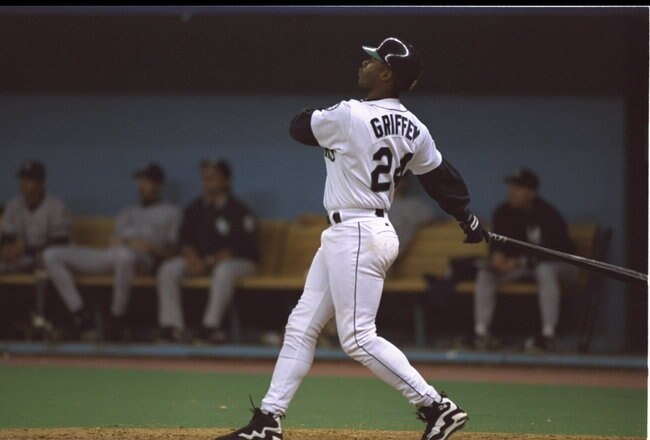
The new candidates for next year offer only one surefire, first-ballot, no doubt Hall of Famer in "The Kid", legendary Mariners and Reds centerfielder Ken Griffey Jr. However, outside of Griff there are no new players on the ballot who are a lock for Cooperstown. I would venture a guess that Trevor Hoffman gains induction, although I do not know if that happens in his first year. After those two, the new ballot contains a lot of great players, but none who stand out as no doubt HOFers.

One name that jumped out to me on this ballot is former Angels and Cardinals centerfielder Jim Edmonds. Edmonds played from 1993-2010, hitting .284 with 393 home runs, while also making four All-Star teams and winning 8 Gold Glove awards. Edmonds' career certainly merits HOF consideration, but with a still crowded ballot it may be tough for him to get attention. Let's take a closer look at Edmond's case for HOF enshrinement.

For Jim Edmonds and the Hall of Fame:


Edmonds was an excellent two way player. Very few players have hit for as much power and a high average while sporting excellent defense the way Edmonds did. In fact, there are only seven players in MLB history with eight or more Gold Gloves and more HR than Jim Edmonds: Mike Schmidt, Willie Mays, Ken Griffey jr, Andruw Jones, Al Kaline, Barry Bonds, and Andre Dawson (Only three [Mays, Bonds and Kaline] had a higher career batting average). Of those seven, four are HOFers, one will go in next year (Griffey), one is Barry Bonds, and the other, Andruw Jones, will be eligible in 2018 (although a steroid cloud could hang over Jones like it has with Bonds).

This offensive and defensive prowess helped Edmonds finish his career with a 60.3 WAR, which is tied with Harmon Killebrew, and ahead of Yogi Berra, Sammy Sosa, Hank Greenberg, Willie Stargell, and Kirby Puckett.

In addition to an excellent batting average, Edmonds got on base at a .376 clip for his career. Add that to his .527 slugging percentage (50th all time, right behind Mike Schmidt and ahead of Jim Rice and Ernie Banks) and you have a career OPS of .9030, which ranks 61st all time, ahead of Willie McCovey, Willie Stargell, Eddie Mathews, Rafael Palmeiro, Harmon Killebrew, Charlie Gehringer and Jackie Robinson.

An overall look at where Edmonds falls shows he finished in the top 150 all-time in:

Offensive WAR (109th)
SLG% (50th)
OPS (61st)
Runs (147th)
Total Bases (149th)
Doubles (126th)
Home runs (57th)
Walks (117th)
Extra Base Hits (83rd)

There are 138 HOF position players, so this shows that Edmonds ranks in and around them in many different offensive categories.

And of course, the primary file for Jim Edmonds hall of fame case:

mmmmm

Against Jim Edmonds and the Hall of Fame: 


There are 18 CF in the HOF. Those centerfielders average a 70.4 WAR, a 42.5 Seven year peak WAR, and a JAWS score of 57.2 (Jaws is a measurement of a players worthiness for the HOF, as compared to the players at their position who are already enshrined. It can be further explained here: http://www.baseball-reference.com/about/jaws.shtml).

Edmonds falls slightly short, with a 60.3 WAR and a 51.4 JAWS score (although his 7 year peak is 44.1, slightly higher than average). What this means in simple terms is this: Edmonds does not quite measure up to what the average HOF centerfielder accomplished in their careers.

Edmonds falls short on the counting stats as well, and these are the ones most often used by BBWAA members to evaluate HOFers. He finished his career with 1949 hits, 1251 runs, 393 HR, 1199 RBI's, and 67 steals. All very respectable numbers, but 393 home runs and 1199 RBI's falls short of the power hitter expectations for the HOF, where 500 HR and 1500 RBI's have become expectations more than guarantees. Likewise, his 1949 hits, 1251 runs and 67 steals indicate Edmonds does not get to go in the route of a speedy singles hitter either (again, 3000 hits or at least in the ballpark would gain him much more attention).

Edmonds never led the league in any offensive statistical categories. Voters especially love seeing dominance, and a player who was never a league leader and has a "Black Ink" score of zero does not point to dominance. Edmonds "Gray ink" score (a measure of being a statistical top ten finisher) is 60, where a HOF player averages 144.

Verdict:

Edmonds was a great centerfielder, a good power hitter, and a player who made some unforgettable plays. He was a legend in his own right and is a player who was vastly under appreciated with his work with the bat. However, his credentials fall just short (in my opinion) of making him a Hall of Famer. I believe outfielders like Tim Raines, Larry Walker and Dwight Evans are more deserving than Jimmy for the HOF. I hope that voters vote for him, but for my (fictional) 2016 ballot, I will be leaving him off. Perhaps if the ballot clears up a bit in the future and he remains over 5% I could make room for him on future ballots, but for now I believe that he falls into a close but no cigar category.

Prediction:

Predicting what HOF voters will do can be tricky. I believe that Edmonds will get votes, but not enough to reach the Hall. With the ballot clearing up he should get some attention. I think he will get enough to stay on the ballot (over 5%) but not nearly enough to go in. Somewhere around what Larry Walker (11.8% in 2015) got sounds about right.

Thanks for reading!
Thursday, February 5, 2015

Facts about the long ball!


"Just to hit the ball
and touch them all
A moment in the Sun
It's a gone and you can tell that one goodbye"
Centerfield - John Fogarty

Is there anything more exciting than a home run? The way the ball flies off the bat like a cannon, the brief pause where the batter looks at the ball before heading toward first, the collective holding of the breath of the crowd, and the high five between third base coach and ball player as he heads for home. Nothing is better. With the lull that post Super Bowl February brings to the sports world before March Madness and eventually (finally!) the return of baseball, let's take a look at some fun baseball facts and oddities surrounding the long ball: 


Ramon Santiago has hit 30 home runs in his 13 years in the league. His first one was a lead-off home run.....off Pedro Martinez. He also hit one in the 7th inning of the same game off Tim Wakefield.


Bobby Higginson hit a two-out, pinch-hit home run in the 9th inning off Roy Halladay......to break up a no-hitter........in Halladay's second career start.

Stan Musial hit ten or more home runs off seven different pitchers in his career.....all who were all-stars. Three of them were Hall of Famers.


Jamie Moyer allowed home runs to both Mike Schmidt (b. 1949) and Giancarlo Stanton (b. 1989).

At one point, Brad Miller had ten career home runs, which he had hit in six different games. He had four multi-HR games compared to only two single HR games.

There are two major league baseball players with ten+ wins and 50+ home runs. One is Babe Ruth......the other is Rick Ankiel.


Adam Dunn hit four home runs in an eight day span between June 6-14, 2003. Two of them, off Roy Halladay and Randy Wolf, were lead-off home runs.


In 1986, Ron Kittle (176 career HR) faced Hall of Famer Bert Blyleven 6 times. He recorded 1 double and four home runs. His slash line was a blistering .833/.833/3.000. His career line against Blyleven was .318 with 9 home runs and 16 RBI's in 50 PA's.

Five players have hit 100 or more home runs with three different teams: Reggie Jackson, Alex Rodriguez, Jim Thome, Adrian Beltre and Darrell Evans.

Daniel Nava hit the first pitch he ever saw in the Major Leagues for a Grand Slam, off Joe Blanton.

Will Clark (who also hit a HR in his first career at-bat) was 12-36 in his career off of Nolan Ryan, with six of his 12 hits being homers.


LHP Mickey Lolich had 90 career hits in 821 at-bats, for a .110 batting average in the regular season. Lolich did, however, hit a home run in Game 2 of the World Series in 1968, en route to a Tigers victory and, eventually, Lolich winning WS MVP honors.


That's all for now, but I am happy to post more of these if people are interested! Remember, only 26 days until Spring Training games begin!

Friday, January 16, 2015

Tulo and Nomar

These are always fun:


PA H 2B HR RBI SB BA OBP SLG OPS OPS+ WAR
Player A 4176 1231 272 173 669 82 .323 .370 .555 .925 134 41.2
Player B 4064 1068 205 176 604 55 .299 .373 .517 .891 125 37.6


Player A is Nomar Garciaparra, through his age 29 season (2003).

Player B is Troy Tulowitzki, also through his age 29 season (current).

These two players are often talked about together, and for good reason. Not only are they statistically similar, they both have another (unfortunate) thing in common: injuries. Injury prone players often make coaches (and fans) very nervous once they hit age 30. Garciaparra is somewhat of a poster boy for this, as he was only able to accrue 1940 more plate appearances over five seasons after age 30, before bowing out at age 35. While his production only dropped slightly (he hit .291/.343/.446 in that span) his inability to stay on the field turned a once promising Hall of Fame career into a big game of what-if. 


Fans in Colorado have to wonder the same thing about their fan favorite at shortstop. Every year there is talk about the Rockies trading Tulo away, but it has yet to happen. The fans there love Tulo, but one has to wonder if his previous injury problems will catch up to him in a big way. Tulowitzki put up a 5.5 WAR just last year alone, so it seems likely that he will eclipse the 3.0 WAR that Garciaparra put up in his 30's. However, his value might not get much higher than it is right now, and the glut of prospects the Rockies could get in return may make it worth it.

It felt like robbery when the baseball world was not able to see a healthy Nomar in his 30's. His prime was as good or better than Alex Rodriguez and Derek Jeter, and without injuries he could have had a career that cemented himself as one of the best hitting shortstops of all time. Even with his injury-riddled 30's, Garciaparra still got 5.5% of the BBWAA voters to vote for him as a HOFer, meaning he will get to stay on the Hall of Fame ballot for next year. 


Tulowitzki could be baseball's redemption for our loss of Nomar. If he is able to fight off the injury bug, his career could take the path that we know Nomar's could have, vaulting him into the ranks as one of the better shortstops the game has ever seen, and earning him the plaque that Nomar should have earned. Of course, this is a massive if, for a few reasons. One - as we look at the stats above, they are indeed comparable but Nomar is better in nearly every category. So even if Tulo is able to continue to play, he may not be what Nomar could have been. Again though, he could more than make up for that in his 30's. The big if is of course the injuries. If Tulo can stay healthy, his ceiling could reach the upper echelon of big, power hitting shortstops. The Alan Trammell, Barry Larkin, Nomar Garciaparra prototype could live on through a guy like Tulo (although comparing him to the games greatest (clean) power hitting SS, Cal Ripken Jr, seems comical because of his "iron man" reputation). 

I hope Troy Tulowitzki can stay healthy and show us the Garciaparra that we never had, if only because I hate seeing careers derailed by injuries. No one likes the what-if game.

Tuesday, January 6, 2015

The Hall of Fame Fallout and Congrats

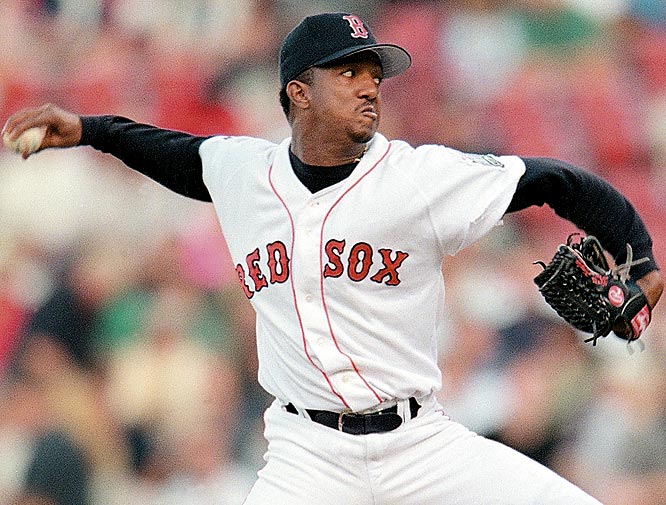
Four of the greatest players I have ever watched play baseball in my lifetime received a call this morning that they will be inducted into the National Baseball Hall of Fame. While there is a lot to talk about regarding the ballot, the voters, the rules for induction etc, I want to first congratulate Randy Johnson, John Smoltz, Pedro Martinez and Craig Biggio for getting the call to Cooperstown. Ultimately, this day should be about celebrating their accomplishments on the field, and boy are there a lot of them. It's not every year that you get to see 3000 hits, 3000 strikeouts, 300 wins, 200 wins/100 saves, and multiple pitching triple crown seasons inducted in the same year. Seeing the three pitchers get in on the first ballot was excellent, and Biggio's name was finally heard, after having to wait three years too long for a guy who had 3000 hits and has the most doubles of all-time by a right handed hitter. A huge congrats to the four of them.


Upon seeing the ballot results for the first time, my mind raced with a whole lot of different thoughts, reactions, questions, and so on, and I am going to use this outlet to voice all of them in a stream of consciousness type of setting. As always, please comment or ask questions, I love debating these things!

First thought: Four players going in and one player falling off the ballot (Don Mattingly, who received 50 votes this year) really helps clear up the ballot for the class of 2016. There were certainly voters who used 5 of their 10 votes this year on Randy Pedro Smoltz Biggio and Mattingly, who will now have much more space on their 2016 ballot. Next years ballot will have only one no doubt, must vote for player in the person of Ken Griffey jr. After that, Trevor Hoffman, Billy Wagner and Jim Edmonds will all garner some attention, but do not carry nearly the firepower that a class like Randy, Pedro, Smoltz, Carlos Delgado, Gary Sheffield and Nomar Garciaparra does. (Troy Glaus, Garrett Anderson and Jason Kendall deserve some love, although not as realistic HOF candidates).


This ballot cleanse should be a breath of fresh air for Mike Piazza, who has a very good chance of gaining the additional 5% he needs to be in the Hall next year. It is also good news for +50% guys Jeff Bagwell (55%) and Tim Raines (55%). Theoretically, the voters who typically use all 10 of their votes should have four new openings on their ballot, with one of their votes going to Griffey. Hoffman seems likely to get over 50% and possibly enough to go in, so voters still will have two additional votes that are likely to go to guys like Edgar Martinez, Mike Mussina, Curt Schilling, Fred McGriff, Larry Walker and Alan Trammell, who all have seen their support limited by the overcrowding of the ballot and the asinine, outdated "rule of 10". Many, many BBWAA writers who posted their ballots expressed their frustration with not being able to vote for players they feel deserve HOF enshrinement, including Tim Kurkjian, who came on ESPN this morning and admitted that he "lost sleep" over not voting for Mike Mussina, Alan Trammell and Edgar Martinez. It seems that next year Timmy will be able to pick a couple of those guys for his ballot.

Second thought (That was a long first thought): What hat will Randy Johnson wear into the Hall of Fame?

The first three are easy: Pedro goes in as a Red Sock(Sox?), Biggio as an Astro, and Smoltz as a Brave. But then we get to Randy.

Randy Johnson spent the majority of his career with two organizations, the Arizona Diamondbacks and the Seattle Mariners. His resume with Arizona slightly outdoes his Seattle one, but his legacy seems to be most associated with the Mariners. Ultimately the choice is Randy's and if he goes with his heart I think Seattle will be the choice. They are the team that gave him his start, and really taught him how to be a pitcher, not just a thrower. He would not have been the pitcher he was in Arizona if not for his coaches in Seattle. Having said that, winning back to back to back to back (!) Cy Young awards, a pitching triple crown and a WS with the Dbacks will be tough to turn down. My hope is that he goes in as a Mariner, my prediction is that he goes in as a Mariner, but my fear is that he goes in without picking a team, like Greg Maddux did last year. I personally think that is a cop-out, and I hope that Randy at leasts picks a team, even if it is Arizona.

Third thought: Which 49 voters didn't vote for Pedro Martinez?

Every once in a while a player comes along who is very apparently a step above everyone else. These are once in a generation talents, guys who seem to defy all laws and simply dominate. Yet, in the history of Hall of Fame voting, not a single player has been elected to the Hall of Fame unanimously. Tom Seaver received 98.8% of the vote in 1992, which remains the highest percentage in voting history. With all due respect to Tom, what did Cal Ripken, Stan Musial, Roberto Clemente, Mickey Mantle, Greg Maddux, Willie Mays and Hank Aaron need to do to get 100% of the votes? 5000 hits? 900 home runs? Sadly, the reason that Willie Mays and Hank Aaron were left off of ballots is very likely tied to old voters who refused to vote for them based on the color of their skin. While tragic, this reflects a cultural shift that is (hopefully) no longer impacting voters. At least that is what I thought, until today when I saw that 34 more ballots were cast for Randy Johnson than Pedro Martinez. 34 people who felt that Randy Johnson was a HOFer, but not Pedro Martinez. Is Randy a better candidate than Pedro? Probably, but only slightly. I don't see any rationale for saying Randy Johnson deserves it, but not Pedro. I cannot prove that any of the voters who did not vote for Pedro did it because they are racist, because I have not seen any of them come out and publicly defend their ballot. Which leads me to my next thought.

Fourth thought: Why aren't ballots published?

Voters have never been required to disclose their ballots to the public. Many current writers choose to post their ballots on twitter or other social media, and some choose to write articles as well. However, well over 45% never disclose their ballot, meaning that discrepancies like the one listed above are never answered. I want to know who did not vote for Pedro, because they should have a chance to have their say in court. If they chose not to vote for him simply because they didn't like him, or because they are bigoted, shouldn't the HOF consider not allowing them to vote? The two guys who voted for Aaron Boone this year? The guy who voted for Jacque Jones last year? I want to know who they are. If the guys who voted for Aaron Boone chose to only vote for Boone, or voted for ten guys (including Boone) but left off someone like Tim Raines or Carlos Delgado (who just missed getting enough votes to stay on the ballot) I want to know, and I want the BBWAA to seriously consider revoking their voting privileges. If they have some logical reason for making that decision, and they publish it defending themselves, than so be it. But to hide behind anonymity and cast a ballot that seems to mock the entire system is cowardly and devalues the system put in place by the Hall of Fame to induct the games greats. I hate thinking that if I had a ballot I would take it more seriously that a large chunk of the people who vote, but knowing that some of the voters have voted for candidates like Boone, Jones and Armando Benitez makes me feel like I would.

Final thoughts:

I love talking about the Hall of Fame. I love debating each candidates case for induction, comparing players, looking at highlights, and making predictions for each year. I do not love seeing many of my favorite baseball writers agonizing over who to choose, because the ballot is so stuffed with talent and they can only choose to elect ten players per year. Seeing guys like Buster Olney, Jayson Stark, Tim Kurkjian and Ken Rosenthal publically denounce the rule of 10 and cry out for a new system that allows them to vote for who they want should send a huge message. These four are some of the most intelligent baseball minds in the world right now, and for them to say "I want to vote for Alan Trammell but I can't" should speak volumes about the flaws in the system.

I also hate the current situation that steroids are playing in the voting process. Either the HOF needs to come out and say that they do not want known users in the Hall and remove Bonds/Clemens/Sosa/McGwire/Sheffield from the ballot, or they need to acknowledge their use and tell the voters to vote based purely on stats, basically nullifying the "integrity of the game" rule in the voting process (I still believe that many writers would continue not to vote for Bonds and Clemens, but making the vote public would at least put everyone in the public eye). If those names get cleared off of the ballot, and the voters are allowed to vote for as many candidates as they want, and each voter must publicize their ballot, we are going to see a dramatic change in many players voting totals, including Edgar, Raines, Jeff Bagwell, etc... Unfortunately none of these changes seem imminent, and we are most likely going to be looking at a crowded ballot, a ten vote limit, and about half of the ballots being closed from the public eye for 2016. Won't stop me from continuing to blog about the HOF and discuss it with anyone who will listen. This brings me to my last point:

My 2016 Ballot and predictions: 

I will change my ballot between today and January 5th of 2016. I might change it tomorrow even. But looking at the new candidates for 2016 and the layovers from this ballot, here is who I anticipate "voting" for in 2016:

Mike Piazza
Jeff Bagwell
Tim Raines
Curt Schilling
Edgar Martinez
Alan Trammell
Mike Mussina
Fred McGriff
Ken Griffey Jr
Trevor Hoffman


This is preliminary, and I will need to take a closer look at Jim Edmonds, Billy Wagner, Jason Kendall and Troy Glaus, but I believe that these are the ten candidates who most deserve enshrinement next year. I feel bad leaving off Larry Walker and Jeff Kent, just as I felt bad leaving off great candidates this year, but at least next year won't be quite as bad.

As for a prediction, I think Griffey, Piazza and Trevor Hoffman will be inducted. Somewhat bold on Hoffman, especially when you consider the voting results for Lee Smith, but Hoffman and Mariano Rivera redefined the closer position and deserve recognition for that. Griffey is a no brainer, and Piazza does not need too much more support to gain induction. Another year of 3 inductees would do wonders for the clearing of the ballot. Here's to hoping we can see that.

Congrats again to four of the best players the game has ever seen, and enjoy your immortality in Cooperstown among the greats.