Polo Grounds

Polo Grounds

Wednesday, March 30, 2016

2016 Baseball predictions

Baseball is just around the corner! I've done preseason predictions the last few years, and even though all it really does is prove to me how little I actually know about the MLB, I'm going to trot out there again and give you 15 predictions for the 2016 season. I welcome any feedback!

1. Miguel Cabrera finishes the season with .330/30/100.

It all depends on his health for the big fella. If he can stay healthy and play in over 155 games, the HR/RBI numbers should get there, although hitting over .330 will be a challenge. Fangraphs uses two very advanced metrics to estimate a players full season output, called ZiPS and Steamer.

ZiPS has Miggy at .306/24/88 in 131 games
Steamer has Miggy at .313/25/91 in 133 games.

A 155+ game season should get Miggy to the 30/100 range, and I think he will repeat or at least come close to the .338 he hit last year, especially with a lot of power surrounding him in the line-up.

2. Byron Buxton plays a full season, shows why he is a top prospect.

I didn't put any tangible measurements on this prediction, which will make it harder to judge at the end of the year. However, as of right now, Buxton is penciled in as the starting CFer for the Twins, and if he manages to hold onto that job all year and post double digit home runs and steals, I think we will have our answer. Most predictions have him only hitting around .260, but I think he will rebound from his poor showing in the MLB last year and put up big numbers. Mike Trout hit .220/.281/.390 in his 40 game debut in 2011, setting him up for his incredible 2011 season. Maybe Buxton will do the same.

3. Jonathan Schoop finishes with 25+ home runs.

Schoop had a power breakout at the plate last season, blasting 15 home runs despite missing half the season with an injury. If Schoop is able to stay healthy for a full season, he should get an opportunity to mash toward the bottom of an extremely power heavy line-up. Having guys like Machado, Davis, Trumbo, Alvarez, Jones and Wieters hitting around him should allow him to get a lot of fastballs, and a small park like Camden Yards should see the ball leave the yard quite a bit.
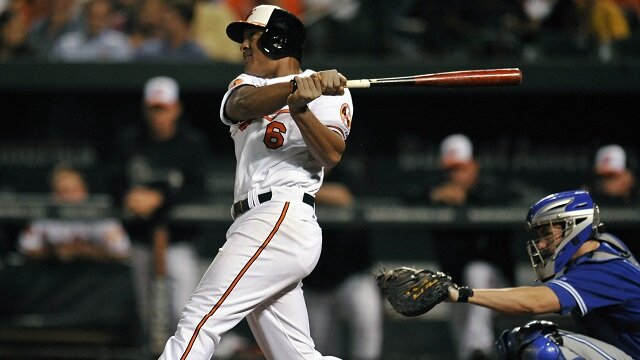


4. Marcus Stroman is the 2016 AL Cy Young winner.

Marcus Stroman has made 24 starts in his young career, tallying a 3.31 ERA, a 1.14 WHIP, and a blistering 129/34 K/BB ratio. The fact that he is only 24 years old, pitches for a team that should score him basically 5 runs every night, and that last season's injury should not affect his ability to pitch (since it happened to his knee) should give him an incredible opportunity to win 20 games and have outstanding peripheral numbers. He will have to compete with regular Cy Young contenders Felix Hernandez, Chris Sale, David Price and Corey Kluber, not to mention up and coming arms like Chris Archer and Carlos Carrasco, but Stroman is as good a bet as any to take home the award.


5. Nick Castellanos finally breaks out, becomes big piece for Tigers.

Castellanos had been, simply put, a bad MLB player for the first 1.5 years of his career. However, unbeknownst to a lot of fans, a switch flipped in Castellanos over the last half of last season. While the Tigers sold off and limped through the 2nd half, Castellanos came alive to the tune of .275/.323/.481 with 22 home runs. He may never be good with the leather, but a .270+ batting average and 30 home runs would go a long, long way toward fans forgetting about his abysmal first two years in Motown.

6. Didi Gregorius hits more home runs that Alex Rodriguez.

I have to have one ridiculously, comically bold prediction each year, mainly for the one time I get it right and can tell everyone I called it. Gregorius played in 155 games last year and managed to muscle 9 HR, even while playing in the band box that is Yankee Stadium. His Line Drive % improved from 19.6% in 2014 to 21.2% last year, but his fly ball % went from 42.9 down to 34.1%, and his HR/FB ratio dropped from 6.4% to 6%, despite moving to the confines of Yankee Stadium. I am anticipating a slight bump in fly balls for Didi (career rate is 38.2%) which should hopefully help him lift 12-15 home runs this season, assuming he stays healthy. Now of course 15 home runs (maximum) should not beat Alex Rodriguez, but something tells me A-Rod is not going to repeat last years surprise performance with the bat, and if he misses any time with an injury I can see him losing playing time to Beltran/Teixeira at DH. Again it is bold, but if A-Rod can't get it done the Yankees will replace him in the line-up, whereas they have much fewer options to replace Didi with, especially since he at least can hang his hat on having superior glove work.


7. Ichiro falls just short of 3,000 hits.

If Ichiro hits .250 on the season (ZiPS and Steamer both predict almost exactly that) he will need 260 at-bats to obtain his 65th hit of the season, and 3000th hit overall. Ichiro had 398 AB's last year, and 359 AB's in 2013, however his role is expected to be diminished this season as long as the Marlins young trio of OF stays healthy. I expect that Ichiro will earn around 200 at-bats this season, which would require him to hit .325 in order to obtain 65 hits. Something like 52 hits in 200 at-bats (.260 BA) would put Ichiro only 13 hits shy of 3k. I expect him to land somewhere around that margin, and am hoping he sticks around next season to get up to 3k.

8.  Adam Laroche plays in the MLB this season.

I think once the dust settles on this whole Drake Laroche situation, Adam will want to play baseball again, and I would imagine teams will be interested in adding his services. Taking all this time off, coupled with his poor season last year, will most likely relegate him to a PH/bench role, but I wouldn't be surprised to see someone give him that opportunity, especially a contending team in need of a bench bat.

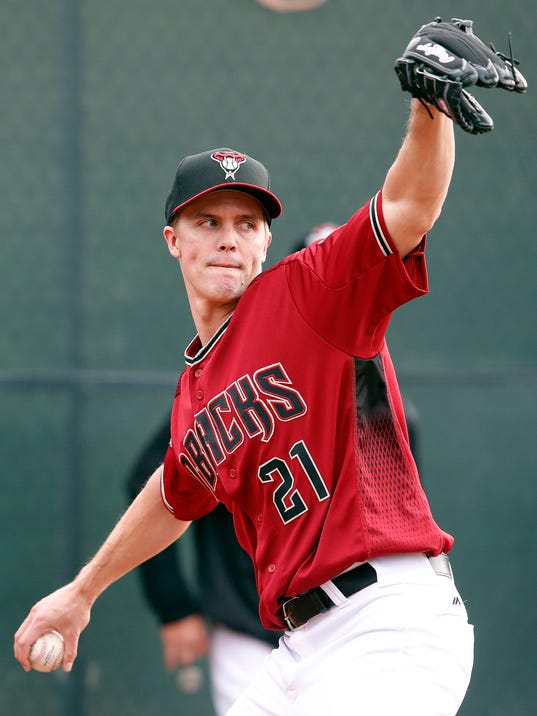
9. Zack Greinke is not the best SP on the Diamondbacks.

Again, no specific measurements can be used to 100% confirm this at the end of the year, but I have a feeling one of Shelby Miller or Patrick Corbin will end up being a more productive pitcher off the bump than Greinke. Greinke is due for a regression after last years ridiculous numbers, and I think Corbin will bounce back very nicely from his injury, and Miller will flourish with a change of scenery (and some offense!).


10. Carlos Rodon finishes with 200+ strikeouts.

Rodon put up an 8.98 K/9 in his 139 big league innings last year, after putting up a ridiculous 51 K's in 34.2 MiLB innings. Both ZiPS and Steamer project him to improve his K/9 to over 9.0 next season, and as long as he is able to pitch at least 180 innings, 200 K's looks mighty attainable for the young lefty with the nasty slider. The biggest hang up will be an innings count, and if the White Sox fall out of contention it seems likely that Rodon, who threw 149 innings between all levels last year, will get capped around 160 IP or so, making 200 K's much less likely.

11. Kyle Schwarber hits 40 home runs. 

I tend to try and make somewhat bold predictions, but this one feels kind of lazy. Schwarber blasted 16 last season in only 273 PA's, which was a 38 home run pace. Assuming he gets to play nearly every day (which is the plan for the Cubbies) he should be able to reach at or near 40 home runs this season. His future is not behind the plate, so if the Cubs can get him in the line-up on a daily basis in LF, he should be able to put up big #'s in a very vaunted Cubs line-up.

12. AL Play-off teams: Astros, Tigers, Blue Jays. Rangers and Royals in the Wild Card.

A lot of people are high on the White Sox and the Indians, but I don't feel either team has enough offensive oomph to challenge in that division. Red Sox still have too many holes in the infield and rotation, and the Yankees didn't improve enough to make a big jump in that division.

13. NL Play-off teams: Giants, Cubs, Mets. Nationals and Dodgers in the Wild Card.

Bye bye Cardinals! I felt weird only selecting one NL Central team, since that division is stacked, but the Cardinals did virtually nothing to improve their team and I think the Pirates are going in the wrong direction. Meanwhile the Nationals have a filthy rotation and improved their offense, and the Dodgers, despite losing Greinke, are still scary good.

14. Blue Jays and Cubs play for the World Series.

What a World Series this would be. Bombs, on bombs, on bombs. Don't get me wrong there are some talented arms in this bunch (Stroman, Arrieta, Lester etc) but this would be a very offensive series, especially since every game would be played in either the Rogers Centre or at Wrigley.

15. I'm gonna do it. I'm going to make this prediction. Cubs win. 

Oh boy.

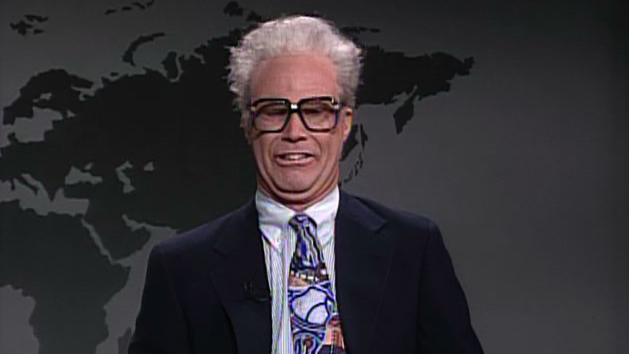
Bonus 16th prediction: Will Ferrell dresses as Harry Caray and yells "Cubs win! Cubs win!" and it becomes an internet sensation.
Wednesday, January 20, 2016

2016 Hall of Fame Congrats and reactions

In order to get my thoughts out in a timely fashion (which has already failed), I've decided to give my rapid fire reaction to the Hall of Fame voting that took place this month.

1. Congratulations to Ken Griffey jr and Mike Piazza!


First and foremost, time to offer congrats to two of the best hitters I have ever watched play the game of baseball. Piazza spent most of his career in the NL and on the East Coast, so I did not grow up watching him nearly as much as Junior, but his accomplishments speak for themselves. 427 Home runs (396 as a catcher) is an incredible accomplishment, and he has put himself squarely in the conversation of best hitting catcher of all time. After three years of waiting (no doubt due to whispers of alleged PED use) Piazza broke through in 2016 with 83% of the vote. A big congrats to him, his family, and Mets/Dodgers fans everywhere.

The Kid. The man who hit a home run in 8 consecutive games, who nearly broke his wrist jumping into a wall to get an out, who hit a home run right after his father back in 1991, and who scored the winning run on "The double" to send the Mariners into the ALCS in 1995 is now forever immortalized in Cooperstown. In what was basically a formality, Griffey received an astonishing, record breaking 99.3% of the votes, breaking Tom Seaver's 14 year old record of 98.2% and cementing himself as one of the all-time greats. I grew up watching him, and will forever remember his effortless swing, amazing outfield plays, and of course the backwards hat (which Bryce Harper has suggested should be reflected in his HOF plaque). Congratulations Junior, and I look forward to your HOF speech in July.

2. A small but impactful shift in BBWAA voters


It may not have seemed all that noticeable to a casual fan, but something happened this season on the ballot that has created hope for many players who may have seemed lost before. The BBWAA "cleaned out" a lot of their previous voters, choosing to remove voters who had not been covering baseball in recent years. This dropped the number of voters by around 100. That, coupled with a bigger group of new voters (who have covered baseball for at least 10 years) seemed to create a shift in voting philosophies. This shift affected quite a few players pretty substantially. Six players received at least a 10% boost from last year: Mike Piazza (+13.1%), Jeff Bagwell (+16.9%), Tim Raines (+14.8%), Edgar Martinez (+16.4%), Mike Mussina (+19.4%), Curt Schilling (13.1%), and Alan Trammell (+15.8%).

Bagwell (71.6%) and Raines (69.9%) seem very likely to finally make the leap over the 75% necessary for induction next year. Notable were the shifts to Mike Mussina and Edgar Martinez, who before seemed destined to remain between the 5% necessary to stay on the ballot, and the 75% necessary to be inducted. However, with jumps all the way into the mid 40's, both now have a fighting chance of seeing themselves in Cooperstown before their time is up on the ballot. Mussina has seven years of eligibility remaining, Martinez only three. Edgar will need about 1/3 of the voters to change their tune regarding Designated Hitters and the Hall of Fame in the next three years, which seems (unfortunately) pretty unlikely. With a 16% jump last year, however, it is possible!


Last point on the shifting voting patterns is the small but steady growth in support for baseball's favorite stars, Barry Bonds and Roger Clemens. Bonds and Clemens each gained about 8% last year, leaving them still well short of induction, but trending the right way. The new voters favored both Bonds and Clemens, and many voters (including Oregon voter John Canzano) wrote publicly about their changing stance on voting for PED users. Whether this change will eventually enshrine Bonds/Clemens remains to be seen, but for now it appears they will stay on the ballot, collecting somewhere below 75% of the vote and hurting the candidacy's of other players. Which leads me to my next point....

3. How the Hall of Fame rules are hurting certain players

Player A: .284/.376/.527 with 393 HR, 1199 RBIs, and a 60.3 WAR
Player B: .295/.380/.540 with 407 HR, 1333 RBIs, and a 66.5 WAR

Safe to say these are pretty close right? Both were elite defensive CFers, although neither was quite considered the best of his time.

Player A, Jim Edmonds, fell off the ballot after receiving only 2.5% of the vote, well short of the 5% necessary to stay on the ballot.

Player B, Duke Snider, only received 17% in his first year on the ballot in 1970, before steadily climbing up to 86% in 1980 to reach induction.

The fact that Jim Edmonds, a fringe HOF caliber player, didn't even earn enough to stay on the ballot is a shame. I'm not 100% sold on him being a HOFer (you can read more about my thoughts here) but he certainly merited more consideration than this. He joins Kenny Lofton, Kevin Brown, John Olerud and Lou Whitaker as players who didn't get their fair share in court when it comes to HOF consideration.

Other players, who I have advocated heavily for in the past, are not seeing a lot of support, often due to the "rule of ten" which says that BBWAA writers are only allowed to vote for ten players per ballot. Fred McGriff, Larry Walker, Billy Wagner, Jeff Kent and the aforementioned Jim Edmonds are players who are getting bumped for being the 11th or 12th most deserving candidate on the ballot. The Hall of Fame should simply be about who deserves enshrinement, not "which ten of these players" deserve it. The Hall of Fame's fear is that allowing voters as many votes as they want will create a situation where tons of players are getting elected, but last year less than half of the voters used all ten of their votes, which proves that this would not be the case. Many of the voters who used all ten would have happily extended votes to McGriff, Mussina, Walker, etc had they been able to, and we might not have seen such a brief end to the HOF candidacy of Jim Edmonds.

4. 2017 HOF ballot and Predictions

I've never been known for my attention span, so now that Piazza and Griffey are sailing into Cooperstown, let's take a look forward and see what the 2017 class has in store for us. The way I see it, three prominent players will be joining the ballot who should garner serious HOF attention. Those three would be Ivan Rodriguez, Manny Ramirez and Vladimir Guerrero. Magglio Ordonez, Jorge Posada and a slew of players from the epic 2001 Mariners (Mike Cameron, Carlos Guillen and Arthur Rhodes) will also be joining the ballot, but I don't believe they will merit serious consideration. 

The big three, however, should make for some interesting discussion over the next year. Ramirez in particular will be quite the hot button issue. He will become the first player up for induction who actually got suspended by Major League Baseball for PED use during his playing career. How the voters decide to treat Ramirez will say a lot about the future candidacies for David Ortiz and Alex Rodriguez. I predict he will get votes, but nowhere near the 75% necessary. Something around 25-30% seems reasonable (similar to McGwire throughout his candidacy).

Ivan Rodriguez also has a pretty large steroid cloud over his head, having been called out specifically by Jose Canseco as a steroid user in his tell-all novel, Juiced. How the voters handle him will also be interesting to see, as he is very clearly one of the best catchers of all time. Piazza's 4 year wait for induction doesn't do anything to help Pudge's chances, and I don't think we will see him on a plaque anytime soon (if at all).

To me, Vladimir Guerrero is a Hall of Famer. 449 home runs, a .318 batting average, one of the best arms in the business, and great speed make him one of the best and most fun talents of his generation. He appeared by all accounts to do it the right way, and his only knock was his lack of patience at the plate, and the fact that he spent his heyday up north in Montreal. That, however, shouldn't factor in too much, and I believe Guerrero will eventually get enshrined, although I'm not incredibly confident it will happen in year one.


Getting down to brass tacks, I think we will see three inductees next year, all holdovers from this current ballot: Jeff Bagwell, Tim Raines, and Trevor Hoffman. I think Guerrero will be just short and Schilling will continue to inch closer, and I think Mussina and Edgar will climb over the 50% mark on their way toward induction (hopefully).

For me, my ballot will most likely change, but if I had to pick today I would vote for Guerrero, Bagwell, Raines, Hoffman, Schilling, Edgar, Mussina, McGriff, Walker, and Billy Wagner. With apologies again to Jeff Kent - who just doesn't quite make the cut.

I welcome any questions or feedback, these are some of my favorite pieces to write!

Sunday, December 6, 2015

2016 Hall of Fame Ballot

It's the most wonderful time of the year! Hall of Fame ballot time! Instead of arguing over the dinner table about Politics or Religion, I prefer to argue about whether or not Barry Bonds and Roger Clemens should get elected into the Hall of Fame. We've been hearing this argument for five years now, and Buster Olney is sick of it. He's not alone. Many people are frustrated with the current voting system the Hall of Fame is employing. Voters are only allowed to vote for 10 players at a time, meaning some very talented players, players many would consider Hall of Famers, aren't getting votes. Olney's piece details his frustration, in which he has concluded that he will abstain from voting, in order to help a guy like Mike Mussina. Casting a ballot and not voting for Mussina is actually hurting Mussina's HOF chances, something Olney wants to avoid. If this is a topic that interests you I encourage you to read his piece.

For me, however, I will still cast my fictional ballot, since leaving someone off of it does not have any impact on their actual HOF candidacy, just their feelings (If you're reading this, sorry Randy Winn). I would like to point out that I agree with Olney's (and others) points about the flaws in the system, and will have to leave players off of my ballot that I believe are Hall of Famers. I don't know if I would abstain like Olney is doing, but I can see his point.


Below is a list of all the players on the ballot, with how I "categorize" them:

Garrett Anderson (ballot filler, less than 5%)
Brad Ausmus (ballot filler, less than 5%)
Jeff Bagwell (HOFer)
Barry Bonds (PEDs)
Luis Castillo (ballot filler, less than 5%)
Roger Clemens (PEDs)
David Eckstein (ballot filler, less than 5%)
Jim Edmonds (close but no cigar)
Nomar Garciaparra (close but no cigar)
Troy Glaus (ballot filler, less than 5%)
Ken Griffey Junior (HOFer)
Mark Grudzielanek (ballot filler, less than 5%)
Mike Hampton (ballot filler, less than 5%)
Trevor Hoffman (HOFer)
Jason Kendall (ballot filler, less than 5%)
Jeff Kent (HOFer)
Mike Lowell (ballot filler, less than 5%)
Edgar Martinez (HOFer)
Fred McGriff (HOFer)
Mark McGwire (PEDs)
Mike Mussina (HOFer)
Mike Piazza (HOFer)
Tim Raines (HOFer)
Curt Schilling (HOFer)
Gary Sheffield (PEDs)
Lee Smith (close but no cigar)
Sammy Sosa (PEDs)
Mike Sweeney (ballot filler, less than 5%)
Alan Trammell (HOFer)
Billy Wagner (close but no cigar)
Larry Walker (HOFer)
Randy Winn (ballot filler, less than 5%)

After eliminating the ballot fillers and the "close but no cigar players", we are left with 17 players.

Five of those players (Barry Bonds, Roger Clemens, Mark McGwire, Gary Sheffield, and Sammy Sosa) have very heavy steroid clouds hanging above them. While I believe that they are HOF caliber players, I will choose to use my votes elsewhere. Kevin Cooney, a voter from Philadelphia, explained his thought process, saying "With a numbers crunch, you have to set a standard. Mine is 'clean guys' first". While it is impossible to know who is or isn't clean (Piazza and Bagwell have been suspected, and many people believe Sheffield is clean) I want to cast my vote for players who I believe are HOF caliber, and who I think did it the right way. There is no way to know for sure, but the system only allows me to vote for ten, and I want to vote "clean" players in first.

So now I am left with 12. Here is where I have trouble. I believe all 12 of these players are HOFers, but I can only vote for 10. Looking at the list, there are eight that stand out as guaranteed votes in my mind:

Griffey, Hoffman, Bagwell, Piazza, Martinez, McGriff, Raines,and Schilling.

This leaves me with only two spots for four players: Alan Trammell, Mike Mussina, Larry Walker and Jeff Kent.


Trammell gets a vote. He's in his final year on the ballot, he accrued a career WAR of 70.4 (about the same as Derek Jeter) was one of the best defensive SS of all time, hit 185 HR, and was the 1984 WS MVP. I am surprised how little his support has been over the past 15 years, and can only hope the voters have a very massive shift in viewpoint this year. Otherwise, his candidacy will be left up to the Veteran's Committee down the road.

Jeff Kent, despite being one of the most prolific offensive second basemen of all time, loses a vote from me. He had a great career, but doesn't quite stack up to Mussina and Walker in my opinion. He had a surly demeanor as well, something that I think is hurting him with the voters, many of whom have stories of his bad attitude toward them.

I would love to see Larry Walker and Mike Mussina in a cage match for my final vote, but Walker certainly would have an edge size wise (provided of course that he is healthy, which was a longshot during his career). I have written about both of them separately (Larry here, and Mike here) and have advocated that each of them should be in the Hall of Fame. This makes this decision hard, but I am going to leave Mike Mussina off my ballot and give my final vote to Larry Walker. Mussina seems to come up the most in discussions about the HOF's "Rule of Ten" with Olney citing him specifically in his article linked above, and Tim Kurkjian memorably calling out the Hall of Fame's rule about only being able to vote for ten players, saying "I lost sleep last night over not voting for Mike Mussina".


I predict that Ken Griffey jr and Mike Piazza both go in next year, thinning out the ballot slightly (both Alan Trammell and Mark McGwire will come off the ballot next year as well). I think Bagwell and Hoffman will both come very close, and will eventually see enshrinement.

I welcome any and all questions, comments, opinions, etc on my ballot and my thoughts on the Hall of Fame. Happy reading!


Friday, November 20, 2015

Assessing my 2015 predictions (yikes)

Alright, so I (regrettably) owe it to all of you to analyze the predictions I made before the season started. Some of these I feel pretty good about, but overall, not my best work. I did win my Fantasy Baseball league, however, so at least my guesswork there was pretty solid. Without further ado, let's dig in:

1. Oswaldo Arcia is the AL Home Run leader (wrong. 0/1)

Not even close. Arcia hit two early on, then succumbed to a lengthy injury. He returned and went down to AAA, where he only managed to hit 12 home runs, with a .199 BA. It is hard to tell what his future is with the Twins, and in Major League Baseball. Chris Davis was the leader with 47, only 45 more than Arcia.

2. Nelson Cruz hits less than 30 home runs (wrong. 0/2)

I'm not upset I got this one wrong. I worked for the Mariners this summer and got to see a lot of Nelson's blasts up close and personal, and it was a very fun experience! Cruz hit .302 with 44 bombs, second only to Davis.


3. Kris Bryant hits over 25 home runs after getting called up (Yes! 1/3)

Bryant had a tremendous rookie campaign, hitting 26 home runs with 99 RBI's and a .275 BA. He was an All-Star, the NL Rookie of the Year, and finished 11th in MVP Voting. Look for big things for him in the future with the Cubbies.

4. Jose Iglesias wins the AL SS Gold Glove award (wrong. 1/4)

Alcides Escobar took the award this year, and though I think Iglesias was the mret exciting defensive SS to watch, Escobar had a great year defensively, and Iglesias struggled a bit more than expected. He's still young, so I wouldn't be surprised to see a few come his way in the future.


5. James Paxton wins 15 games, records over 180 strikeouts (wrong. 1/5)

Injuries once again derailed what looked to be a promising season for Paxton, and we have yet to see what he can do with a full season under his belt. He finished 2015 with a 3-4 record, 3.90 ERA, 7.5 K/9 and 56 K's in 67 innings. He still has some work to do to get the K numbers where they could be, but until we see a full season of him, it will be hard to know what kind of skill level he possesses at the big league level.

6. Albert Pujols passes Mike Schmidt (548) on the all-time home run list this season (Yes! 2/6)

This was the first goal I officially got to put in the books as correct, as Albert mashed his way to 28 home runs at the All-Star break, finishing with 40 overall - his most since 2010 with St. Louis. It was great to see Albert back to "Machine" form, and I hope he passes a few more people next year.

7. The San Diego Padres finish below .500. (Yes! 3/7)

My buddy who is a Padres fan blamed me all year for their woes, saying my prediction is what caused their disappointing season. Troy, here's to hoping you find a new infield (except Gyorko) and make me predict that they win 100 games and make the WS next year.

8. Mike Trout joins the 40-40 club. (wrong. 3/8)

I acknowledged right off the bat that this was a bold prediction, so I'm not surprised I didn't get this one. Trout did have his first 40 HR season, but the home run output by Pujols meant Trouty didn't have to run as much, hence the 11 steals he finished with last year. Trout certainly has the skillset for a 40-40 season, however, so don't be surprised if he chases that type of performance in the near future.

9. Drew Smyly finishes in the top 10 for the AL Cy Young award. (wrong. 3/9)

A 3.11 ERA, 1.17 WHIP, and 10.4 K/9 over a full season would almost certainly put you into the conversation as a top 10 Cy Young candidate. Those are the numbers Smyly put up last year - only problem is that they were over 66 innings as Smyly battled a very serious shoulder injury that derailed most of his season. A full, healthy season of Smyly could easily be one of the top ten starters in the American League.


10. Brian Dozier hits more HR than every other second baseman in the league. (Yes! 4/10)

Dozier Bulldozed his way to 28 home runs last year, seven more than second place two bagger Robinson Cano. Dozier didn't hit particularly well outside of all the dingers, however, and will need to improve upon that to become one of the top tier second baseman in the game.

11. George Springer hits 35+ home runs. (wrong. 4/11)

Not quite. Springer struggled with injuries (the theme of my predictions so far) and wasn't able to find the power stroke that he used to swat 20 home runs in 78 games in 2014. He managed 16 last year in 102 games, a clear step backward. Hopefully he can have a healthy offseason and display some more of that power next year.


12. AL play-off teams: Mariners, Royals, Red Sox, Angels, Tigers. (1/5) (5/16)

Yikes. I'm a big AL fan, and only mustered 1/5 play-off teams. In fact, only the Angels came close to making the Play-offs, the Mariners, Red Sox, and Tigers all finished near or at the bottom of their divisions. Just goes to show how unpredictable a full season of baseball can really be.

13. NL play-off teams: Dodgers, Pirates, Nationals, Cardinals, Brewers (3/5) (8/21)

"The NL Central is a power division, and the Cubs are just on the outside looking in while their prospects continue to develop together."

^ That is what I wrote for my prediction last year, and it is mostly true, with the exception of course being that the Cubs prospect development happened much sooner than anticipated. Also, 4/5 were very solid predictions, but man the Brewers were bad.

14. Red Sox and Cardinals play for the World Series. (0/2 - 8/23)

"I hate, hate, hate myself for this prediction. God I hate myself for this prediction."

I still hate that I made this prediction - but I'm glad neither team made the World Series.

15. Red Sox in 7. (0/1) (8/24)

Nope!

33% correct. Not as bad as I thought, and I am proud of the ones that I did get right, but hopefully some room for improvement for next year! I need a team doctor on hand when I make my predictions, otherwise I'll continue to predict big season for players who end up missing large chunks of time due to injuries.

Thursday, September 24, 2015

Oregon Baseball - Hitters

127 MLB players were born in the State of Oregon. While that only makes up 0.7% of all MLB players, we can still construct a very solid 25 man roster from the players native to the Beaver state. Without further ado, let's take a look at the squad:

We will start with the hitters, with a blog to follow with the pitching staff.

1. Jacoby Ellsbury - Centerfield (2007-Active)

Ellsbury was born in Madras, Oregon and went to local Madras High School before playing his College ball at Oregon State University. He slots in perfectly as the leadoff hitter for the Oregon squad, thanks to his 299 career steals and stellar .344 on base percentage. At age 31, there may still be plenty left in the tank for Jacoby, who signed a massive seven year contract with the Yankees before the 2014 season. However, injuries have certainly taken their toll, and it remains to be seen if he can ever repeat his amazing 2011 season, where he hit 32 home runs, drove in 105 runs, stole 39 bases and hit .321/.376/.552.


2. Johnny Pesky - Shortstop (1942-1954)

Pesky is one of the most iconic Red Sox players of all-time, but he was actually born in Portland, Oregon and played high school ball at Lincoln High School. He was signed as a free agent in 1940 and made his MLB debut in 1942, promptly leading the league in hits with 205, complimented by a .331 batting average. Pesky then went overseas and served in the US Military for three seasons, before returning in 1946 and leading the league in hits AGAIN, this time with 208 and a .335 average. As if that wasn't enough, Pesky led the league in hits for a third (non) consecutive season, with 207 in 1947 to go along with a .324 average. Pesky finished his career with 1455 career hits, but a blistering slash line of .307/.394/.386. He didn't hit home runs or steal a lot of bases, but he played a good shortstop and his .394 on base percentage will make him a great table setter for the big home run hitters in the middle of the line-up.


3. Dale Murphy - Right Field (1976-1993)

Dale Murphy was born in Portland and went to local Wilson High School, before playing his college ball at BYU. Murphy was primarily a centerfielder, but with Ellsbury on the roster he will shift to right field, where he played 749 games in his career. Murphy was one of the most dominant outfielders of his generation, particularly during a six year stretch with Atlanta between 1982-1987, where he averaged 36 home runs, 105 RBI's, 18 steals, slashed .289/.382/.531 and made the all-star game every year, won back to back MVP awards, 5 gold glove awards, and four silver sluggers. The rest of Murphy's career was extremely good as well, and he finished with 398 home runs, 161 steals, a .346 on base percentage and 2111 hits. Murphy was on the HOF ballot for 15 years, never reaching above 24 percent of the vote. He will soon be eligible for the Veteran's Committee, and if he is selected will become the first Oregon born baseball player inducted into the Hall of Fame.


4. Dave Kingman - Designated Hitter (1971-1986)

Kingman is the most prolific home run hitter of this group, having mashed 442 bombs during his career. Born in Pendleton, Kingman moved early on and ended up playing his high school ball in Mount Prospect, Illinois. Nevertheless, as an Oregon born boy, he occupies the clean-up spot in the batting order, and serves as the designated hitter thanks to his absolutely atrocious glove work during his career. In fact, outside of mashing home runs, Kingman was not a very good ball player. His .236 batting average and .302 on base percentage are poor, and his defense was bad, but he led the league in home runs twice and was only 58 home runs away from 500, which he may have gotten had the league not colluded against him, choosing not to sign him to a contract after 1986 despite coming off of a 35 home run season with the A's. As it stands, he will add some power to the line-up.


5. Richie Sexson - First Base (1997-2008)

Sexson, another Portland born boy, rounds out an incredibly powerful 3-4-5 in this line-up, having mashed 306 home runs in his career. Similarly to Kingman, Sexson was barely more than a power hitter, having struck out over 1300 times in his career and playing below average defense at first base. However, with a .344 on base percentage, Sexson at least knew how to draw a walk, and a .261 batting average is respectable. Career home run totals of 398, 442 and 306 in the middle of the line-up is certainly going to make pitchers tread pretty carefully.


6. Ken Williams - Left Field (1915-1929)

Ken Williams was born in Grants Pass, Oregon in 1890, making him the oldest player on this team. Williams cracks the line-up because of his well-rounded set of skills. During his career, Williams hit 196 home runs, stole 154 bases, slashed .319/.353/.530, and played above average (for the time period) defense in left field. A guy who is capable of hitting a 3 run home run or setting the table with a single and a stolen base, Williams makes for a great number six hitter.


7. Scott Brosius - Third Base (1991-2001)

Brosius was born in Hillsboro, attended Rex Putnam High School, and went to Linfield College before being taken by Oakland in the draft. He remains an Oregon baseball icon because after his playing career, he has returned and coached at both of his alma maters. One of the more well-known Oregon baseball players, Brosius was no slouch as an MLB player as well, blasting 141 home runs in his 11 year career with the A's and the Yankees, where he won 3 World Series rings and the 1998 WS MVP award, when he hit .471 with 2 home runs and 6 RBI's. A clutch hitter, a good fielder, and an Oregon baseball legend make Brosius an easy pick to man the hot corner and hit seventh for this squad.


8. Ben Petrick - Catcher (1999-2003)

Most local baseball folks know the story of Ben Petrick. An incredibly talented backstop out of Glencoe High School in Hillsboro, Oregon, Petrick was selected in the 2nd round by the Colorado Rockies in 1995. He made his debut in 1999 and hit .322/.406/.495 over 71 games between 1999 and 2000, with seven home runs and good defense behind the plate. Then, suddenly, his production fell off. He hit .230 over the next two seasons in Colorado before being dealt to Detroit in 2003, where he hit .225 in 43 games. He attempted a comeback in the minor leagues, and then retired after the 2004 season, announcing that he had been diagnosed with Parkinson's disease, which impacted his ability to play baseball at such a high level. He later found out he had late stage Lyme Disease. Since retiring, Petrick has been active in the Oregon community, coaching both baseball and football at Glencoe High School and working as a special consultant with the Hillsboro Hops, a short-season A ball team with the Arizona Diamondbacks. Petrick may not have the most impressive statistics of any Oregon born catcher, but his talent was the highest, and his story is the best. Petrick, in his prime, would have easily been worthy of a starting gig on this team, and hitting 8th may have even been too low.


9. Harold Reynolds - Second Base (1983-1994)

Reynolds was born in Eugene Oregon, but went to High School in Corvallis before playing college ball at San Diego State, and then spending 11 years in the Majors. Reynolds was a good defensive second baseman, earning three gold glove awards and a 6.7 dWAR for his career. He was also very fast, stealing 250 bases, including 60 in 1987 to lead the league. His hitting may have left some to be desired, with a .258/.327/.341 slash line, but his speed and defense make him an important piece of this team. I've always liked using the 9 spot as a second lead-off spot, and Reynolds certainly fits that bill.


Bench:

Jed Lowrie - Utility infielder (2008-active)

Lowrie's ability to switch-hit and play every position in the infield make him a great platoon/pinch hitting option, and his power is greater than both starting middle infielders as well.

Scott Hatteberg - Catcher/First Basemen (1995-2008)

While Hatteberg may have spent more of his career as a first baseman, the Salem native fits in perfectly on this team as a backup catcher to Petrick. Known primarily for his ability to draw a walk, as highlighted in the film Moneyball, Hatteberg hit .273/.361/.410 with 106 home runs in a 13 year career with Boston, Oakland and Cincinnati. He also hits from the left side, making him a great platoon option with Petrick and potentially Sexson/Kingman as well.

Aaron Rowand - Outfielder (2001-2011)

Rowand is a great option as a fourth outfielder, as he has experience at all three outfield spots, with his primary experience being in center, making him a good option for the injury prone Ellsbury. Rowand played for 11 years, hitting .273 with 136 home runs and 267 doubles, giving the Oregon club some power off the bench, and a great option to slide into the line-up when any of the starters need a break.

John Jaha - DH/1B (1992-2001)

Jaha didn't break into the bigs until he was 26, but the Portland native immediately starting making his mark, blasting 19 home runs in his first full season, and 34 in 1996. He flamed out rather quickly, but not before finishing with 141 home runs, and an impressive .369 on base percentage. Unfortunately, as a right handed hitter, he cannot platoon with Kingman or Sexson, who both also hit right-handed. His power and ability to draw a walk, however, make him a valuable pinch hitting option.

Darwin Barney - Utility Infielder (2010-active)

Barney's value to this team is not with the bat, but rather with the glove. An unimpressive .245/.293/.335 hitter, Barney has accrued a 1.5 oWAR in his career. However, his 7.5 dWAR is incredible, as evidenced by his 2012 Gold Glove award. The Portland native may never be a great hitter, but is one of the better fielding middle infielders in the game, and could be used as a late inning defensive replacement and a pinch runner.

Tuesday, August 11, 2015

Larry Walker and the Hall of Fame

I have written blog posts about a lot of the players who will appear on the 2016 HOF ballot, including Jim Edmonds, Billy Wagner, Nomar Garciaparra, Fred McGriff, Mike Mussina and Curt Schilling. I have very strong feelings about a lot of these players, and am hoping to get a post out about a vast majority of the players who are hoping for induction next year.

Up next is a player who is entering his sixth year on the ballot, but who has seen his percentage drop from 22.9% in 2012 down to 11.8% last year. It is hard to understand why the voters are ignoring the five tool talent possessed by former Expos, Rockies and Cardinals right fielder Larry Walker, but let's examine the entirety of his career a little closer and see what comes up:


For Larry Walker and the Hall of Fame:

As I have mentioned before, there are a few different "types" of Hall of Famers: The longevity guy (like Craig Biggio) who put together a steady career that amounted in milestone numbers (like 3000 hits or 300 wins) but who may not have been the most dominant player of his era. Then there are the peak players, players who simply dominated a period of time, but did not last long enough to reach those peak numbers. (Obviously there are also players who fit into both categories, guys like Willie Mays, Hank Aaron etc).

Walker definitely fits into the second category. His career may have spanned 17 seasons, but he only played more than 150 games once, as he was constantly nagged by injuries. He was consistently good, but definitely peaked for a six year period between 1997-2002. This peak, however, needs to be talked about as one of the best six year peaks of all time (5 1/2 really, he missed most of the 2000 season with an injury). Between 1997-2002, Walker slashed a blistering .353/.441/.648/1.089 with a 157 OPS+. He averaged 30 home runs and 98 RBI's, and accrued 392 walks compared to 419 strikeouts. His WAR during this period was 36.1, or about a 6 WAR per season.

During this time period, Walker was a three time batting champion (98, 99, 01) with second place finishes in 97 and 02 (he hit .366(!) in 97 but finished second to Tony Gwynn, and he only hit .338 in 02, losing to Bonds' steroid fueled .370 average). He was a five time gold glove winner, a two time silver slugger winner, a four time all-star, and the 1997 MVP. Perhaps most tragically, he finished a distant tenth in MVP voting in 1999 despite slashing .379/.458/.710/1.168, good for first place in every single category, along with 37 home runs and 115 RBI's.

In addition to having a peak rivaling the best hitters of all-time (right fielders in the HOF average a seven year peak WAR of 43, Walker's was 44.6) Walker was also an incredible five tool talent. He could hit for average (.313 career and three batting titles), and power (383 home runs and 471 doubles, led league with 49 bombs in 1997), he had speed (230 steals and 62 triples for a power hitter) and an incredible arm in the outfield (he won seven gold gloves and is 17th all time in assists as a RF and 9th in double plays).

All of these talents helped him accrue a career WAR of 72.6, good for 56th all time for position players, ahead of Hall of Fame outfielders Dave Winfield, Andre Dawson, Tony Gwynn, and Duke Snider.

Larry Walker is 12th all time in slugging %, and 15th all time in OPS, ahead of sluggers like Willie Mays, Hank Aaron, Alex Rodriguez, Stan Musial and Frank Robinson.

According to baseball-reference, Larry Walker has a HOF monitor score of 148 and a HOF standards score of 58, where the average HOFer scores 100 and 50, respectively.


Against Larry Walker and the Hall of Fame:

There is one argument that gets thrown around constantly when discussing Larry Walker's HOF candidacy: The fact that his dominant seasons (specifically 1995-2004) were spent in the pre-humidor Coors Field era. In 2007, Coors field installed humidors to store the baseballs in before the games, in an effort to combat the drastically higher elevation at Coors Field (Coors is at 5200 feet above sea level, the next highest stadium is Chase Field in Arizona, at 1100 feet). Prior to this installation Coors had far more home runs, doubles, and triples than any other stadium, thanks largely in part to the drier, more elastic baseballs.

It would be pretty pointless to argue that Walker wasn't at his most productive in Colorado. He spent 10 seasons there, accruing 48.2 of his 72.6 WAR, including 258 of his 383 home runs. While a member of the Rockies, Walker hit .334/.426/.618 compared to his .281/.357/.483 in his first six seasons in Montreal. He never hit more than 23 home runs in Montreal, before blasting 36 his first year in Colorado in 1995. He led the league in doubles in 1994 with Montreal, but other then that he was only ever a league leader in Colorado, where he won all three of his batting titles.

Walker, much like current ballot partner Nomar Garciaparra, suffered from a rash of injuries that kept his career numbers from reaching certain milestones. Walker only played over 150 games once, and only played over 140 games four times over 17 seasons. He missed about half of the 1996 and 2000 seasons, which were right in the heart of his peak. Had he been healthy those seasons alone, he probably would have mashed another 35 home runs and 110 RBI's. As it stands, Walker finished with 383 bombs and 1311 RBI's, fine career totals but short of the expectations for power hitting outfielders (63rd all time in home runs and 105th all time in RBI's).

Lastly, I believe the voters are abstaining from voting for certain players in the 90's that they believe may have been using PED's. Personally, I don't believe in withholding a vote from someone based on nothing substantial, but Walker, along with Mike Piazza and Jeff Bagwell, appear to be suffering for this. Unless something damning comes out about any of these players, I believe you should vote based on merit, and not perceived cheating.

Verdict:

I think Larry Walker is a Hall of Famer. I understand the Coors Field argument, but I think it is completely unfair to penalize Walker based on where he played his home games. He did not demand to play there, he simply took advantage of the opportunity given to him. It is impossible to know exactly what his career would have looked like had Coors field used humidors sooner, or had he played elsewhere. However, Coors field didn't make him stronger or faster or a better outfielder, all traits he had long before he played in Colorado. His five tool talent alone should give him the necessary merit, without having to evaluate the field he played on.


Prediction:

Sadly, Walker's numbers have been floating downward recently and have yet to come close to the 75% necessary for induction into the Hall of Fame. I think with four players going in last year there may be a slight uptick in Walker's vote totals, but it does not look like it will reach the 75% necessary. He will be evaluated by the Veteran's committee years from now, and perhaps they will give him a shot.

Tuesday, July 14, 2015

The 2020 All-Star Game

It is no secret that baseball today has a wealth of young talent. A huge majority of today's superstars are under the age of 25, and, provided they stay healthy, could help make the next decade of baseball the most exciting it's ever been, bringing it back to the days of Mickey Mantle, Willie Mays, Roberto Clemente, and Sandy Koufax. After watching the home run derby yesterday and preparing for today's All-Star game, I started thinking about what the 2020 all-star game could look like five years from now. I added five years to everyone's current age and made some tentative rosters. I made the assumption that everyone stays with their current team (which is obviously not true, half these guys will be on the Yankees or Red Sox by then). So without further ado, here is a look at some names to look out for in the 2020 All-Star game (Age in July 2020 listed in parenthesees)

2020 All-Star Game:

AL Starting line-ups:
1. CF Mike Trout (28) - Angels
2. 2B Jose Altuve (30) - Astros
3. LF George Springer (30) - Astros
4. DH Joey Gallo (26) - Rangers
5. SS Manny Machado (28) - Orioles
6. RF Byron Buxton (26) - Twins
7. 3B Miguel Sano (27) - Twins
8. C Salvador Perez (30) - Royals
9. 1B DJ Peterson (28) - Mariners

AL Bench: 
Mookie Betts (27) OF - Red Sox
Carlos Correa (25) SS - Astros
Xander Bogaerts (27) SS - Red Sox
Jose Iglesias (30) SS - Tigers
Yoenis Cespedes (34) OF - Tigers
Yoan Moncada (25) 2B - Red Sox
Kole Calhoun (32) OF - Angels
Jason Kipnis (32) 2B - Indians
Mike Zunino (29) C - Mariners
Mike Moustakas (31) 3B - Royals

AL Pitchers:
Felix Hernandez (34) - Mariners
Chris Sale (31) - White Sox
Chris Archer (31) - Rays
David Price (34) - Tigers
Taijuan Walker (27) - Mariners
Sonny Gray (30) - A's
Dallas Keuchel (32) - Astros
Wade Davis (34) - Royals
Garrett Richards (32) - Angels
Dellin Betances (32) - Yankees


AL Final Vote Candidates:
Josh Donaldson (34) 3B - Blue Jays
Francisco Lindor (26) SS - Indians
Hector Santiago (32) SP - Angels
Brian Dozier (32) 2B - Twins
Josmil Pinto (31) C - Twins


Others to think about: 
Miguel Cabrera (37), Kyle Seager (32), Robinson Cano (37), Rusney Castillo (33), Devon Travis (29), Delino DeShields (27), Mark Appel (28), and Yordano Ventura (29).

I made the assumption that Manny Machado is going to move over to SS in the next few years, something that has often been discussed. If he does not, Carlos Correa would make a fine substitution at the position. First base does not have a ton of young talent in the AL (that I'm aware of) but I know that DJ Peterson of the Mariners is a stud and thought he has a chance to make a difference in the next few years. It also seems likely that one of either Miguel Sano or Joey Gallo moves over to first, what with their tremendous power and defensive deficiencies. I chose mostly to look at young players, but it seems unfair to discount Cano, Cabrera and Donaldson who all seem like they have the potential to still be all-star caliber in five years.

NL Starters:

1. CF Andrew McCutchen (33) - Pirates
2. RF Bryce Harper (27) - Nationals
3. DH Giancarlo Stanton (30) - Marlins
4. 1B Paul Goldschmidt (32) - Diamondbacks
5. C Buster Posey (33) - Giants
6. 3B Nolan Arenado (29) - Rockies
7. LF Joc Pederson (28) - Dodgers
8. SS Andrelton Simmons (30) - Braves
9. 2B Dee Gordon (32) - Marlins

NL Bench:
Corey Seager (26) SS - Dodgers
Kris Bryant (28) LF - Cubs
Anthony Rizzo (30) 1B - Cubs
Justin Upton (32) LF - Padres
Jonathan Lucroy (34) C - Brewers
Todd Frazier (34) 3B - Reds
Addison Russell (26) SS - Cubs
Kolten Wong (29) 2B - Cardinals
Joe Panik (29) 2B - Giants
Billy Hamilton (29) CF - Reds

NL Pitchers: 
Clayton Kershaw (32) - Dodgers
Madison Bumgarner (29) - Giants
Matt Harvey (31) - Mets
Jose Fernandez (27) - Marlins
Jacob deGrom (32) - Mets
Noah Syndergaard (27) - Mets
Carlos Martinez (28) - Cardinals
Craig Kimbrel (32) - Padres
Aroldis Chapman (32) - Reds
Gerrit Cole (29) - Pirates

NL Final Vote:
Carlos Gomez (34) - Brewers
Michael Wacha (29) - Cardinals
Christian Yelich (28) - Marlins
Brandon Belt (32) - Giants
Stephan Matz (29) - Mets

Others to think about:
Jason Heyward (30), DJ LeMahieu (32), Charlie Blackmon (34), Troy Tulowitzki (35), Hunter Pence (37), Jorge Soler (28), Johnny Cueto (34), Jean Segura (30) and Wil Myers (29).

I cannot stop looking at how filthy that NL starting line-up is. Practically all the Cubs hitters and most of the Mets pitchers make this roster; meaning if they are able to keep that core together we could be looking at some spectacular teams. It blows my mind that Jason Hayward will only be 30 in five years, and that Wil Myers will only be 29. Those two could be forces in the next few years, if they can stay healthy. Also, who isn't excited to watch Arenado and Frazier battle it out at third base for the next five plus years?

Potential home run derby match-ups:

Stanton vs. Gallo
Rizzo vs. Pederson
Harper vs. Trout
Sano vs. Bryant

This could be a really fun All-Star game.

Buy your tickets now.